
Metabolism does not suddenly crash at 40. A large 2021 study found that energy use, adjusted for body size and muscle, stays stable from about 20 to 60. What changes is muscle mass, daily movement and, for women, menopause. A moderate calorie deficit, enough protein and regular strength training help most.
Key takeaways
- Energy expenditure adjusted for fat-free mass stays stable from about age 20 to 60.
- The Mifflin-St Jeor formula lowers resting needs by only about 50 kcal per decade.
- Losing muscle and moving less usually matter more than age itself.
- Aim for 1.4–2.0 g of protein per kg if you exercise, and train strength two or three times a week.
- Weight gain is common around menopause; a GP can help with hard-to-manage symptoms.
Does your metabolism really slow down at 40?
Many people notice that the habits that kept their weight steady at 30 seem to work less well at 45. The usual explanation is that metabolism "crashes" at 40. The best data we have tells a more nuanced story. A large 2021 study in Science pooled doubly labelled water measurements, the gold-standard way to measure the energy people burn in daily life, from people aged 8 days to 95 years. After adjusting for fat-free mass (mostly muscle and organs), daily energy expenditure stayed stable from about age 20 to 60 and only began to decline after 60.
In other words, a 45-year-old does not burn much less than a 30-year-old with the same body composition. What tends to change in midlife is the body composition itself, how much people move and how life is organised. Those are the levers worth working on, and they are more within reach than a mysterious metabolic switch.
What actually changes after 40?
- Less muscle, unless you train it. Muscle is active tissue. If it slowly declines through years of less activity, your total energy needs drift down with it.
- Less everyday movement. Desk jobs, commuting by car and busy family lives can quietly cut the walking, carrying and standing that used to burn energy without any planned exercise.
- Hormonal changes in women. The NHS lists weight gain as a common symptom of perimenopause and menopause, often around the stomach and upper body. It is a normal stage of life, not a personal failing, and a GP can help if symptoms are hard to manage.
- Sleep, stress and time. Shorter sleep and packed schedules make planning meals and staying active harder. Our article on sleep and weight loss explains why sleep matters for appetite.
How many calories do you need after 40?
Calorie needs do fall a little with age in the standard equations. The Mifflin-St Jeor formula, widely used to estimate resting energy needs, subtracts 5 kcal for every year of age. Here is what that means for a woman who weighs 70 kg (154 lb), is 165 cm tall and is lightly active (activity factor 1.375):
| Age | Resting energy (Mifflin-St Jeor) | Daily needs, lightly active |
|---|---|---|
| 35 | about 1,395 kcal | about 1,920 kcal |
| 45 | about 1,345 kcal | about 1,850 kcal |
| 55 | about 1,295 kcal | about 1,780 kcal |
A decade adds up to about 50 kcal less at rest and roughly 70 kcal less per day once activity is included. That is real, but it is roughly the size of a large spoonful of oil. A drop in daily movement can easily matter more. Use the calculator below to estimate your own numbers, and see our explainer on TDEE and maintenance calories for how the formula works.
Daily calorie calculator
Mifflin-St Jeor equation × activity factor. Capped at the usual minimum (1,200 kcal women / 1,500 kcal men); going lower needs medical supervision. Estimates only.
To lose weight, a moderate deficit of about 500 kcal a day is a common starting point. As a rough rule, about 7,700 kcal corresponds to 1 kg of body fat, so 500 kcal a day adds up to about 0.45 kg (1 lb) a week. The rule is approximate, because water, muscle and changes in energy use all shift the result. A typical safe pace is about 0.5–1 kg (1–2 lb) a week. Women should not go below about 1,200 kcal a day and men below about 1,500 kcal a day without medical supervision.
Why does protein matter more in midlife?
When you eat less, your body can lose muscle along with fat. Enough protein, combined with strength training, helps you keep it. The recommended dietary allowance for adults is 0.8 g per kg of body weight, which is a minimum to avoid deficiency. The International Society of Sports Nutrition suggests 1.4–2.0 g per kg for people who exercise. For a 70 kg adult, that is 56 g at the RDA and 98–140 g at the ISSN range.
Spreading protein across meals is easier than eating it all at dinner. Some examples from our meal catalog, as Sporty's per-serving estimates (real values depend on recipe and portion):
| Dish | kcal | Protein |
|---|---|---|
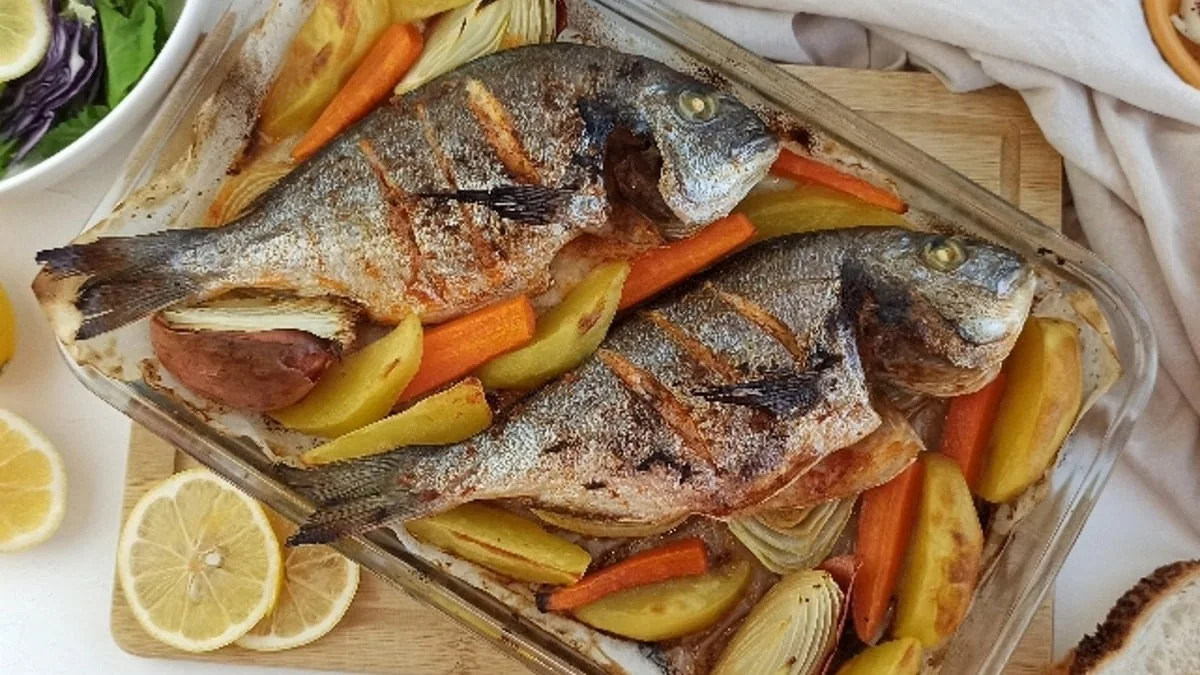
| Baked sea bream with vegetables | 400 | 42 g |
| Grilled salmon with arugula | 460 | 40 g |
| Chicken quinoa power bowl | 520 | 50 g |
| Tuna salad and yogurt | 480 | 52 g |
| Tofu and vegetable sauté | 420 | 32 g |
| Cottage cheese and walnut fruit bowl | 280 | 26 g |
For more ideas, see how much protein you need per day or a lighter option such as grilled fish and vegetables.
What kind of exercise helps most after 40?
The WHO 2020 guidelines recommend that all adults do 150–300 minutes of moderate-intensity activity a week, or 75–150 minutes of vigorous activity, or a mix of both, plus regular muscle-strengthening activity. After 40, the strength part deserves special attention:
- Strength training two or three times a week. Squats, push-ups against a wall or bench, rows with a resistance band and carrying shopping bags all count. Start light and progress slowly.
- Daily walking. It is joint-friendly, needs no equipment and adds energy use on top of your workouts.
- Less sitting. Standing up and moving every hour or so helps rebuild some of the everyday movement that midlife routines remove.
If you have a heart condition, joint problems or have not exercised in years, check with your doctor before starting something new.
What does a realistic week look like?
Here is how the pieces fit together for the 45-year-old woman in the table above, at about 1,850 kcal for maintenance:
- Target: about 1,350–1,400 kcal a day, a deficit of roughly 450–500 kcal, safely above 1,200 kcal.
- Protein: around 100 g a day, for example a protein-rich breakfast, a fish or chicken lunch and a bean or tofu dinner.
- Movement: two 30-minute strength sessions, a brisk walk most days.
- Tracking: a few weeks of logging meals, for example by photographing them in Sporty, to see where the calories really come from.
Expect the scale to move unevenly. Progress over months matters more than any single week.
When should you talk to a doctor?
This article is general information, not medical advice. Talk to a doctor or registered dietitian if you have diabetes, kidney disease, a heart condition or another medical condition, take medication that affects appetite or weight, are struggling with menopause symptoms, have a history of an eating disorder, or if you lose weight without trying. Unexplained weight changes in midlife are worth checking.
Frequently asked questions
Is it harder to lose weight after 40?
It can feel harder, mostly because of less muscle, less daily movement and busier lives. Energy use adjusted for body composition stays fairly stable until about 60, so the basics of a moderate calorie deficit still work.
How many calories should a 45-year-old woman eat to lose weight?
It depends on weight, height and activity. For a lightly active 45-year-old woman weighing 70 kg at 165 cm, maintenance is about 1,850 kcal, so about 1,350–1,400 kcal a day is a moderate deficit. Do not go below 1,200 kcal without medical supervision.
Does menopause cause weight gain?
The NHS lists weight gain, often around the stomach and upper body, as a common symptom of perimenopause and menopause. Strength training, enough protein and a moderate calorie deficit still help, and a GP can advise on symptoms.
Should I do cardio or weights after 40?
Both. The WHO recommends 150–300 minutes of moderate activity a week plus regular muscle-strengthening activity. Strength training helps you keep muscle while you lose fat.
Sources
- Pontzer et al. 2021, Daily energy expenditure through the human life course (Science, doubly labelled water data, ages 8 days to 95 years)
- Mifflin et al. 1990, A new predictive equation for resting energy expenditure
- ISSN position stand: protein and exercise (Jäger et al. 2017)
- Bull et al. 2020, World Health Organization 2020 guidelines on physical activity and sedentary behaviour (Br J Sports Med)
- NHS, Menopause symptoms
This article is general information, not medical advice. If you have a health condition, are pregnant or under 18, talk to a doctor or registered dietitian before changing your diet.