
In a 12-month trial of 609 adults, a healthy low-carb diet and a healthy low-fat diet led to almost the same weight loss: about 6.0 kg versus 5.3 kg. The same pattern repeats across common myths. Meal timing, fasting and cutting one food group matter far less than a steady deficit you can keep.
Key takeaways
- Low-carb and low-fat diets gave similar 12-month weight loss in the DIETFITS trial (about 6.0 vs 5.3 kg).
- The same calories eaten mostly at breakfast or mostly at dinner gave the same weight loss, about 3.3 kg in four weeks.
- A 2026 Cochrane review found intermittent fasting may make little to no difference versus standard diet advice.
- One 640 kcal hamburger can add at most about 0.08 kg of fat; next-day scale jumps are mostly water and food.
- Higher-protein diets help preserve lean mass while eating less; about 25–30 g of protein per meal is a useful target.
Why do weight-loss myths stick around?
Because most of them contain a grain of truth. Eating late can make some people hungrier. Cutting carbohydrates does make the scale drop fast. Fasting does help some people eat less. The myth starts when a small, real effect is turned into a rule that sounds like the whole story. Below are seven common beliefs, what the evidence actually shows, and what to do instead. Each point is backed by a study or a health agency listed in the sources, or by Sporty's per-serving catalog estimates, which depend on recipe and portion.
Myth 1: Do calories eaten after 8 pm turn into fat?
What the evidence says: no clock switches calories from "used" to "stored". In a 2022 randomised crossover trial in Cell Metabolism, 30 adults with overweight or obesity were given all their food for two four-week periods with the same total calories. In one period 45% of the day's calories came at breakfast and 20% at dinner; in the other it was the reverse. Weight loss was practically identical, about 3.3 kg in each period, and total daily energy expenditure did not differ.
The one real difference was appetite: people felt less hungry on the big-breakfast pattern. So timing can affect hunger, and hunger affects how much you eat, but the hour itself does not make food fattening. The full picture is in late-night eating and weight.
Myth 2: Do you have to cut carbs to lose weight?
What the evidence says: the type of diet matters far less than people think. The DIETFITS trial, published in JAMA in 2018, randomised 609 adults with overweight to a healthy low-fat or a healthy low-carbohydrate diet for 12 months. Average weight loss was about 5.3 kg on low-fat and 6.0 kg on low-carb, and the 0.7 kg gap was not statistically significant. Neither a genetic pattern nor baseline insulin secretion predicted who did better on which diet.
Low-carb diets often look more impressive in week one because glycogen is stored with water, so the first drop on the scale is partly water, not fat (see water weight vs fat loss). Over a year, both approaches worked when people ate less overall. Pick the pattern of foods you can actually live with.
Myth 3: Does intermittent fasting burn more fat than normal dieting?
What the evidence says: mostly no. A Cochrane review published in 2026 pooled 22 randomised trials with 1,995 adults with overweight or obesity, followed for up to 12 months. Compared with standard dietary advice, intermittent fasting may make little to no difference to weight loss. Fasting works when it helps someone eat less, and it is a perfectly reasonable tool if it suits your routine, but it is not a shortcut. More detail in intermittent fasting and calories.
Myth 4: Is faster weight loss always better?
What the evidence says: the CDC describes a gradual, steady pace of about 0.5–1 kg (1–2 lb) a week, and notes that people who lose weight gradually are more likely to keep it off than people who lose it quickly. It also calls goals like losing 9 kg (20 lb) in two weeks unrealistic, because they tend to end in frustration.
Very aggressive cuts also make it harder to eat enough protein, fibre and micronutrients, and hunger tends to rise. As a general rule, do not go below about 1,200 kcal a day for women or 1,500 kcal a day for men without medical supervision. If you want to see what a realistic pace looks like for you, read how fast you can safely lose weight.
Myth 5: Does one big weekend undo weeks of progress?
What the evidence says: the maths says no. As a rough rule, about 7,700 kcal corresponds to 1 kg of body fat (the real figure varies, so treat it as approximate). Here is what that means for some typical situations:
| Situation | Extra energy | Maximum possible fat change |
|---|---|---|
| A hamburger on top of a normal day | ≈ 640 kcal | ≈ 0.08 kg |
| A weekend about 1,500 kcal over your needs | ≈ 1,500 kcal | ≈ 0.19 kg |
| A week eating 500 kcal a day under your needs | ≈ −3,500 kcal | ≈ −0.45 kg |
The hamburger figure is our catalog's per-serving estimate. If Monday's scale shows a kilo more than Friday's, most of that is salt, food still in your gut and refilled glycogen, and it usually fades within a few days. The CDC is clear that occasional setbacks are expected; the useful move is to return to your usual routine at the next meal, not to "make up" for it by skipping food.
Myth 6: Is a salad always the light choice?
What the evidence says: a salad is a great way to add vegetables, but its calories depend on what goes on top. Fat has 9 kcal per gram, compared with 4 kcal for protein and carbohydrates, so oil, avocado, cheese, croutons and dressing add up quickly. Compare these international dishes from our catalog:
| Dish | kcal | Protein | Carbs | Fat |
|---|---|---|---|---|
| Chicken Caesar Salad | 480 | 38 g | 18 g | 28 g |
| Avocado Tuna Salad | 420 | 32 g | 14 g | 27 g |
| Mediterranean chickpea salad | 430 | 19 g | 58 g | 14 g |
| Tom Yum Goong | 230 | 24 g | 14 g | 9 g |
A chicken Caesar salad is about 480 kcal, an avocado tuna salad about 420 kcal and a Mediterranean chickpea salad about 430 kcal, while a bowl of Thai tom yum soup with shrimp is about 230 kcal. All four can be part of a weight-loss diet. The point is not that salads are a problem; it is that the word "salad" tells you little about the number. Dressing on the side and a measured spoon of oil keep you in control.
Myth 7: Is protein only for bodybuilders?
What the evidence says: protein matters for everyone who is eating less. A 2015 review in The American Journal of Clinical Nutrition found that, in tightly controlled feeding studies, higher-protein calorie-restricted diets led to more fat loss and better preservation of lean mass than lower-protein ones. The same review describes a modest effect on fullness and suggests about 1.2–1.6 g of protein per kg of body weight a day, with roughly 25–30 g at a meal, as a useful range. Long-term results were less consistent, mostly because people found it hard to stick to the diet.
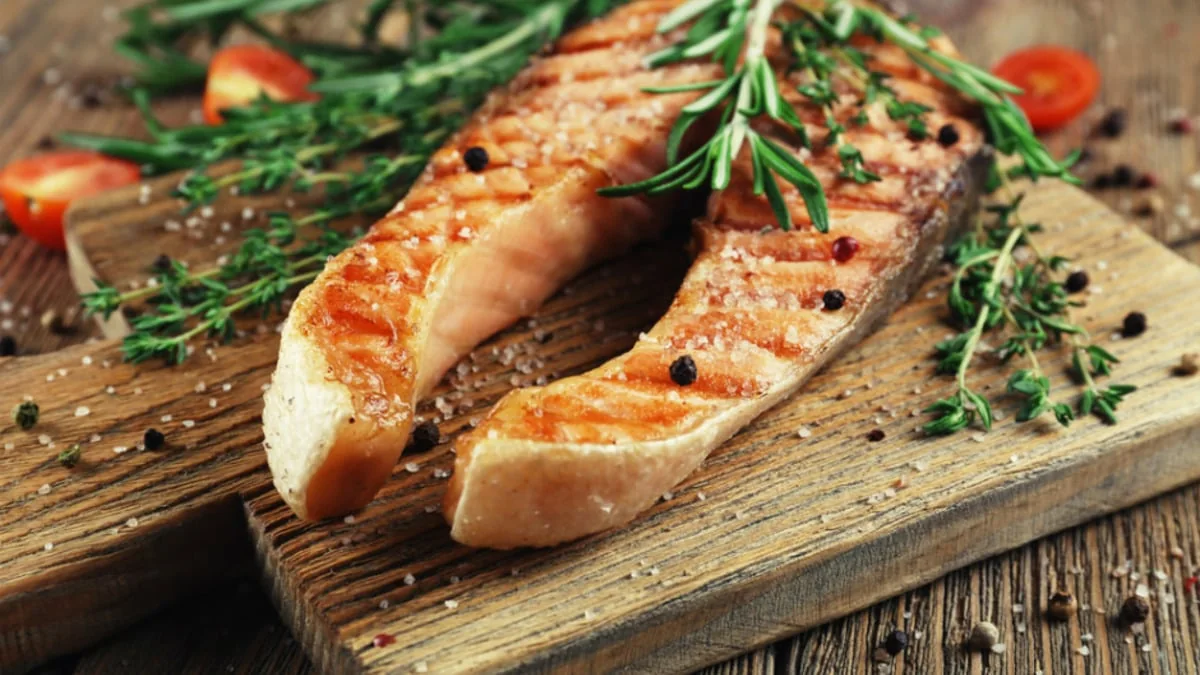
For comparison, the adult RDA is 0.8 g per kg, a minimum to avoid deficiency rather than a target for weight loss. In our catalog, a grilled salmon plate gives about 40 g of protein for 460 kcal. See how much protein you need per day to work out your number.
What actually helps people get unstuck?
- Look at weekly averages, not single mornings. Fat loss is slow; water swings are fast.
- Choose an eating pattern you enjoy. Low-carb, low-fat, three meals or a fasting window can all work if they create a steady deficit.
- Build meals around protein and vegetables, then add carbohydrates and fat to taste.
- Keep the pace realistic, about 0.5–1 kg a week at most, and never crash below the minimums above without a doctor.
- Log honestly, including the extras. Sporty lets you log meals from a photo, which makes oils, sauces and evening snacks easier to catch.
When should you talk to a doctor?
This article is general information, not medical advice. Talk to a doctor or registered dietitian before changing how you eat if you have diabetes or take glucose-lowering medicines, have kidney disease, are pregnant or breastfeeding, are under 18, or have a history of disordered eating. Also seek help if thinking about food and weight feels distressing or takes over your day.
Frequently asked questions
What is the biggest weight-loss myth?
Probably that one specific diet or food rule is required. In the DIETFITS trial, low-carb and low-fat diets produced similar weight loss over 12 months; sticking to a modest calorie deficit mattered more than the type of diet.
Does eating late at night cause weight gain?
Not by itself. When total calories were the same, eating most of them at dinner instead of breakfast gave the same weight loss in a 2022 trial, although late eating made people hungrier.
Why did I gain a kilo after one big weekend?
Most of a sudden jump is water, salt, refilled glycogen and food still in your gut. As a rough rule, about 7,700 kcal equals 1 kg of fat, so one weekend rarely adds more than a few hundred grams of fat.
How fast should I lose weight?
The CDC describes about 0.5–1 kg (1–2 lb) a week as a gradual, steady pace that is more likely to last. Avoid going below about 1,200 kcal a day for women or 1,500 kcal for men without medical supervision.
Sources
- Gardner et al. 2018, Effect of low-fat vs low-carbohydrate diet on 12-month weight loss: DIETFITS randomized trial (JAMA)
- Ruddick-Collins et al. 2022, Timing of daily calorie loading affects appetite and hunger (Cell Metabolism)
- Cochrane 2026, Intermittent fasting for adults with overweight or obesity
- Leidy et al. 2015, The role of protein in weight loss and maintenance (Am J Clin Nutr)
- CDC, Losing weight
This article is general information, not medical advice. If you have a health condition, are pregnant or under 18, talk to a doctor or registered dietitian before changing your diet.